
Holiday Bird Playbook: How to Roast a Whole Chicken for Thanksgiving
30 Oct 2026
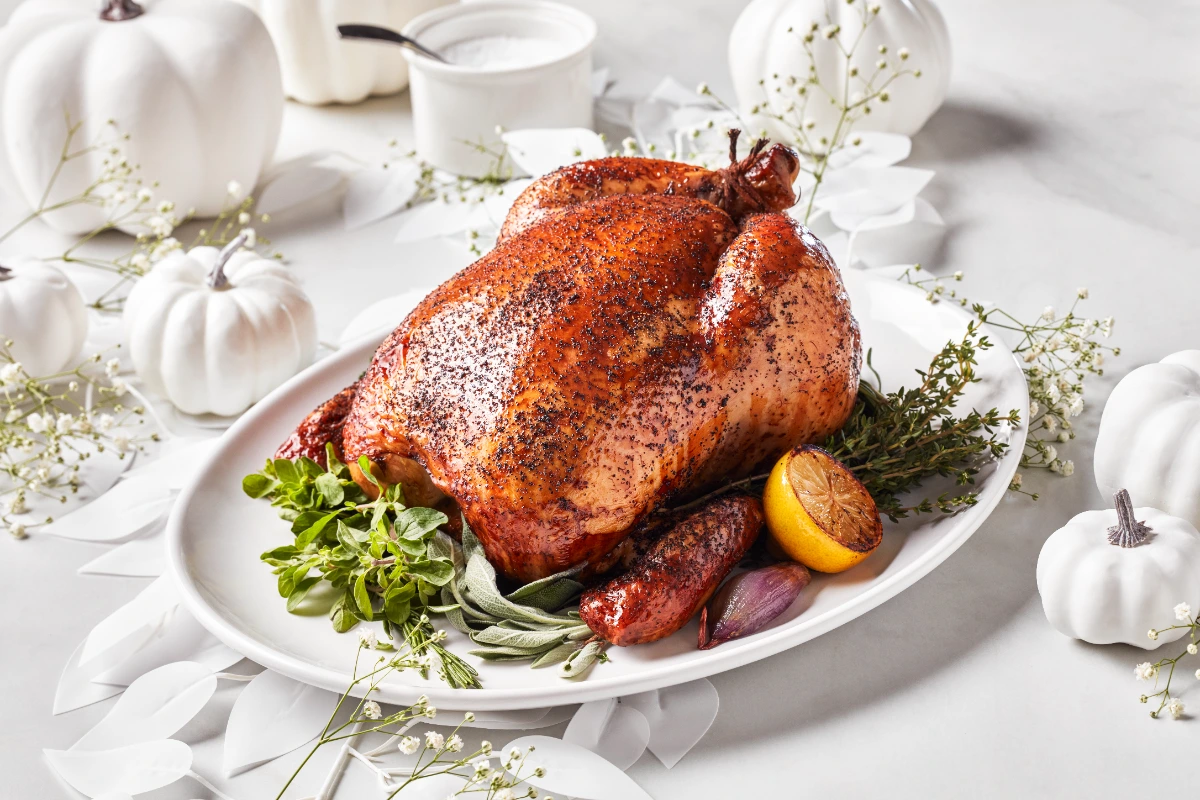
Holiday Bird Playbook, with Tips from Chef Beau
The holidays are right around the corner and while nearly everyone looks forward to the feast, cooking the holiday centerpiece can be a serious challenge, especially for first-time hosts.
In fact, 94% of Americans plan to celebrate Thanksgiving with a turkey, yet more than 60% say they feel intimidated when it comes to properly cooking and carving the bird*.
Thanksgiving Turkey Practice: How to Roast a Whole Chicken?
Sanderson Farms wants to take the pressure of the holiday by helping new hosts gain confidence and practice ahead of time with what we’re calling a “Practice Turkey” (aka a a fresh, whole chicken). We turned to Chef Beau, corporate chef for Sanderson Farms, for the basics of preparing a whole bird with confidence.
Ask Chef Beau: Your Holiday Bird Questions Answered
Q: What should hosts do before they start seasoning or preparing the bird?
Chef Beau: “One of the most important culinary concepts is ‘mise en place,’ which means ‘everything in its place.’ Before handling raw poultry, have all your ingredients, tools, and cookware set out and ready to go. It makes the process more efficient and helps prevent cross-contamination.”
Q: What’s the safest way to thaw a whole bird?
Chef Beau: “Always thaw your bird in the refrigerator and give yourself plenty of time. A good rule of thumb is 24 hours of thawing for every 5 pounds, so a 20-pound turkey needs about four days. As my folks always said, ‘Those who fail to plan, plan to fail.’”
Q: What’s your favorite trick for creating a more flavorful whole bird?
Chef Beau: “Once the bird is thawed, gently separate the skin from the breast meat with your hands, being careful not to tear it. This creates space for added flavor and helps the fat render more effectively during cooking.
Use salted butter or a compound butter with herbs and garlic, spreading it evenly under the skin, especially over the breast meat, to boost flavor and moisture.”
Q: Can you walk us through methods for marinating a whole bird?
Chef Beau: “Taking the time to marinate your bird is one of the best ways to ensure it stays juicy and flavorful throughout the cook.
Both brining and injecting help season the meat and retain moisture, but they work differently.
For a brine, combine a saltwater solution with aromatics like garlic, onion, herbs, citrus, or spices. I also like adding a touch of soy sauce or honey for caramelization. Once the brine has cooled completely, fully submerge the bird and refrigerate for 12 to 24 hours. For poultry, I recommend a brine with no more than 3% salt and a soak time of up to 24 hours.
To inject a bird, start by preparing a brine, then chill it thoroughly before injecting it directly into the meat. Inject small, consistent amounts at regular intervals across the bird, focusing on the crown and leg joints. Be careful not to push the needle all the way through the breast and into the cavity. Once injected, the bird can rest for a few hours to allow the flavors to distribute, or you can move straight to roasting.”
Q: What’s one step cooks shouldn’t skip before roasting?
Chef Beau: “Once your bird is marinated, don’t forget to truss and season it before cooking!
Tuck the wing tips under the breast and tie the legs and wings with butcher’s twine to keep everything in place throughout the roast. I cut about an 18” length of twine for a chicken and a 32” length of twine for most turkeys.”
Q: Should you season the bird before or after trussing?
Chef Beau: “You can season your bird before or after trussing, but I prefer to season the cavity before trussing and the outside afterward to prevent seasoning from getting trapped in folds and creating overly seasoned bites.
When it comes to the seasoning itself, I like to start with salt and build from there with ingredients like pepper, garlic, onion, and other flavors. Pre-mix your seasonings to distribute everything more evenly across the bird.”
Q: Any advice for hosts who want to serve a stuffed bird?
Chef Beau: “The first thing to remember is that stuffing will increase the overall cook time, so plan accordingly. Just like the bird itself, the stuffing needs to reach an internal temperature of 165°F. Checking the temperature through the front of the cavity, where the stuffing is typically packed in the thickest.”
Q: What’s your preferred roasting method?
Chef Beau: “I like to let the bird sit out uncovered for at least an hour prior to cooking. This allows the breast to begin to warm and will aid in the skin getting crispier faster. While the bird is coming to temp, heat the oven.
I like to use a combination of high and low heat. I start by roasting the bird uncovered at 450°F for 20 to 30 minutes, or until I begin to see browning developing on the skin.
Once the skin has started to brown, I lower the oven temperature to 300°F, baste the bird with the pan drippings, and cover the breast meat with foil.
I then cook the bird at 300°F until a calibrated thermometer inserted into the leg joint reaches about 170°F. At that point, I remove the foil, baste the bird again, and return it to a 450°F oven to finish crisping the skin.”
Q: How do you know the bird is fully cooked?
Chef Beau: “When the leg joint reaches 175°F, remove the bird from the oven and let it rest for 30 to 45 minutes before carving to allow the juices to redistribute.”
Q: Once the bird is cooked and rested, how do you recommend carving it?
Chef Beau: “There’s many ways to do this, and I refuse to be the one to tell anyone that their family’s tradition is wrong. Instead, I’ll share the method I enjoy most.
Before carving, reserve some pan drippings to spoon over the finished meat. I remove the breasts whole, slice them thinly, and serve them with crispy skin on top or alongside. The thighs and drumsticks are separated and arranged on the platter, then finished with pan drippings and freshly cracked black pepper. Any stuffing is served separately.”
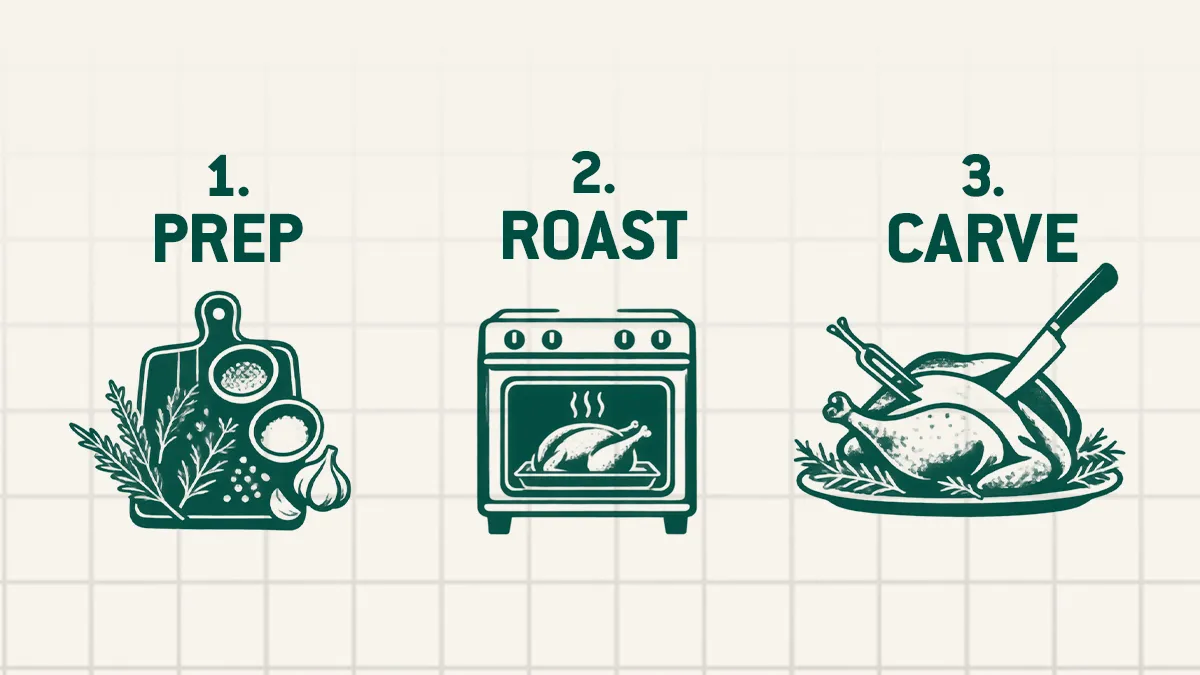
Practice Makes the Perfect Holiday Bird
Whether you’re hosting Thanksgiving for the first time or simply looking to sharpen your skills before the big day, a little preparation can go a long way. From safe thawing and flavorful marinating to proper roasting and carving, the techniques shared by Chef Beau are designed to help hosts approach the holiday table with confidence.
Before tackling a turkey, consider practicing with a fresh whole chicken from Sanderson Farms. The same techniques apply on a smaller scale, giving you the opportunity to build confidence and perfect your process ahead of the holidays. With a little planning, the right tools, and Chef Beau’s expert guidance, you’ll be well on your way to serving a delicious holiday bird.
Pick up a fresh whole chicken on your next grocery run using our store locator.
* = Sanderson Farms + OnePulse Research fielded April 30, 2026

Your Go-to Chicken for Grilling & Smoking
Discover why Sanderson Farms all-natural chicken is the top choice for grilling, smoking and barbecuing. Get juicy chicken recipes, expert grilling tips and flavor-packed ideas for chicken thighs, wings and breasts.

Easy & Bold Global Chicken Recipes for Every Skill Level
Explore global flavors with chicken recipes with Sanderson Farms! From Italian to Hispanic and Asian influence, enjoy easy and bold meals for every taste and skill level.

High-Protein Chicken Recipes for Every Meal
Discover high-protein recipes using premium Sanderson Farms chicken. From snacks to dinner, find flavorful, easy-to-make meals that support your 2026 health goals.